

Sample itinerarycan be tailored to your group
Thailand, Laos & Cambodia
16 days from Chiang Rai to Angkor, with two days on the Mekong
- Duration
- 16 days · 14 nights
- Countries
- Thailand, Laos, Cambodia
- Group size
- 6–16 people
- Best time to go
- November to February
- Pace
- Easy-going, apart from three active days in the forest
- Price
- Per person, on request
Overview
We first planned this route for a group of friends and liked it so much that we now offer it to other groups too. It starts in Bangkok, goes north to Chiang Rai, crosses the Mekong into Laos and ends at the temples of Angkor, with some free time along the way.
This is a sample itinerary. Your group chooses the dates, the pace and what to add or leave out, and we send you a detailed quote covering flights, hotels, transfers and guides.
Highlights
- Two nights in treehouses in the Lao forest, moving between the trees by zipline
- Two days down the Mekong on a wooden slow boat
- Three nights in Luang Prabang, with the monks’ morning alms round, Kuang Si Falls and the night market
- Limestone peaks and river villages at Nong Khiaw and Muang Ngoi
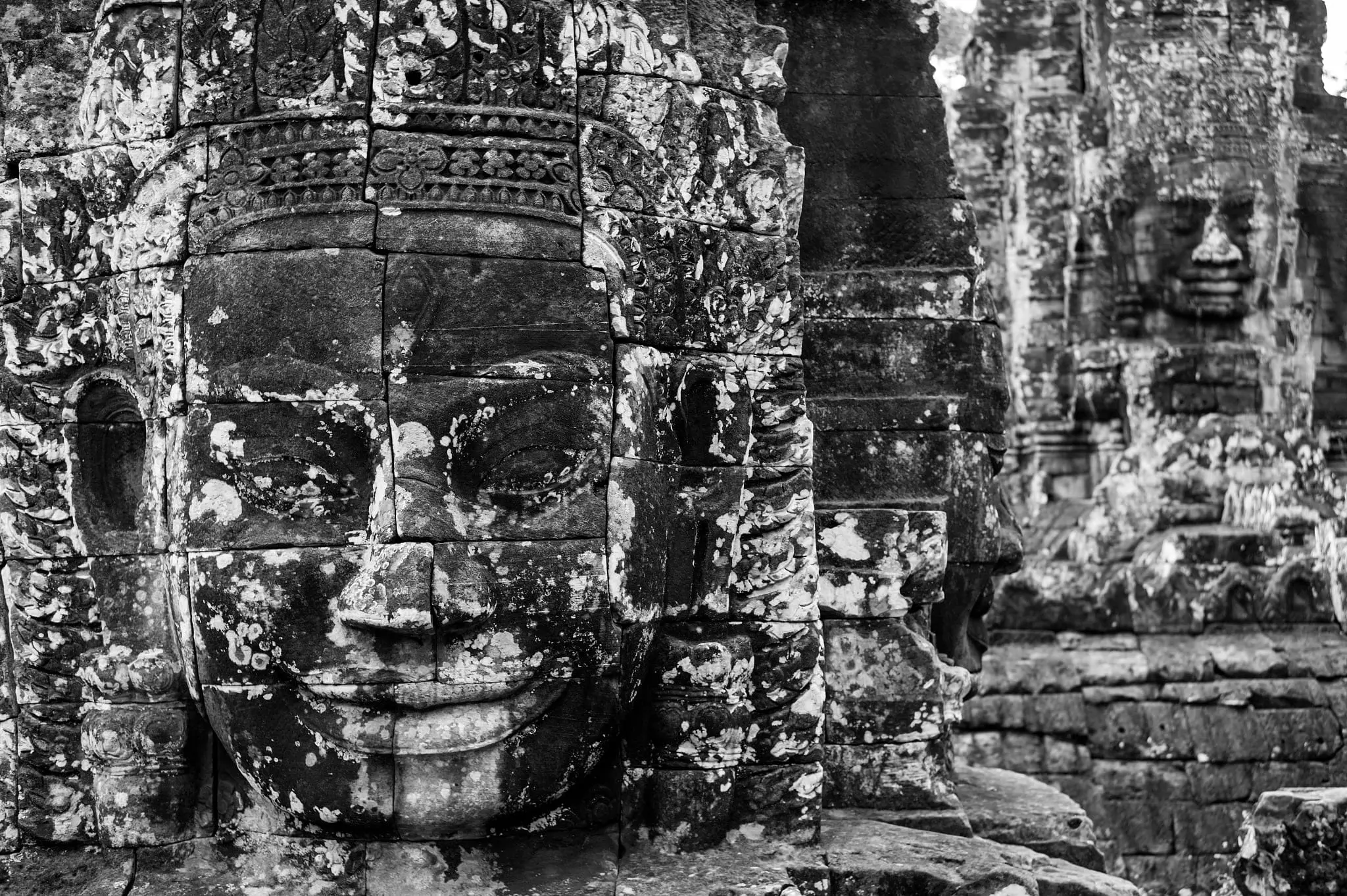
- Sunrise at Angkor Wat, then the stone faces of the Bayon and the tree roots of Ta Prohm
- The White and Blue Temples of Chiang Rai, and the Golden Triangle
Route map
Stops
- 1Bangkok2 nights
- 2Chiang Rai1 night
- 3Golden Triangle
- 4Huay Xai2 nights
- 5Nam Kan treehouses2 nights
- 6Pakbeng1 night
- 7Luang Prabang3 nights
- 8Nong Khiaw2 nights
- 9Siem Reap2 nights
Itinerary
Day 1Athens → Bangkok. Overnight: On the plane
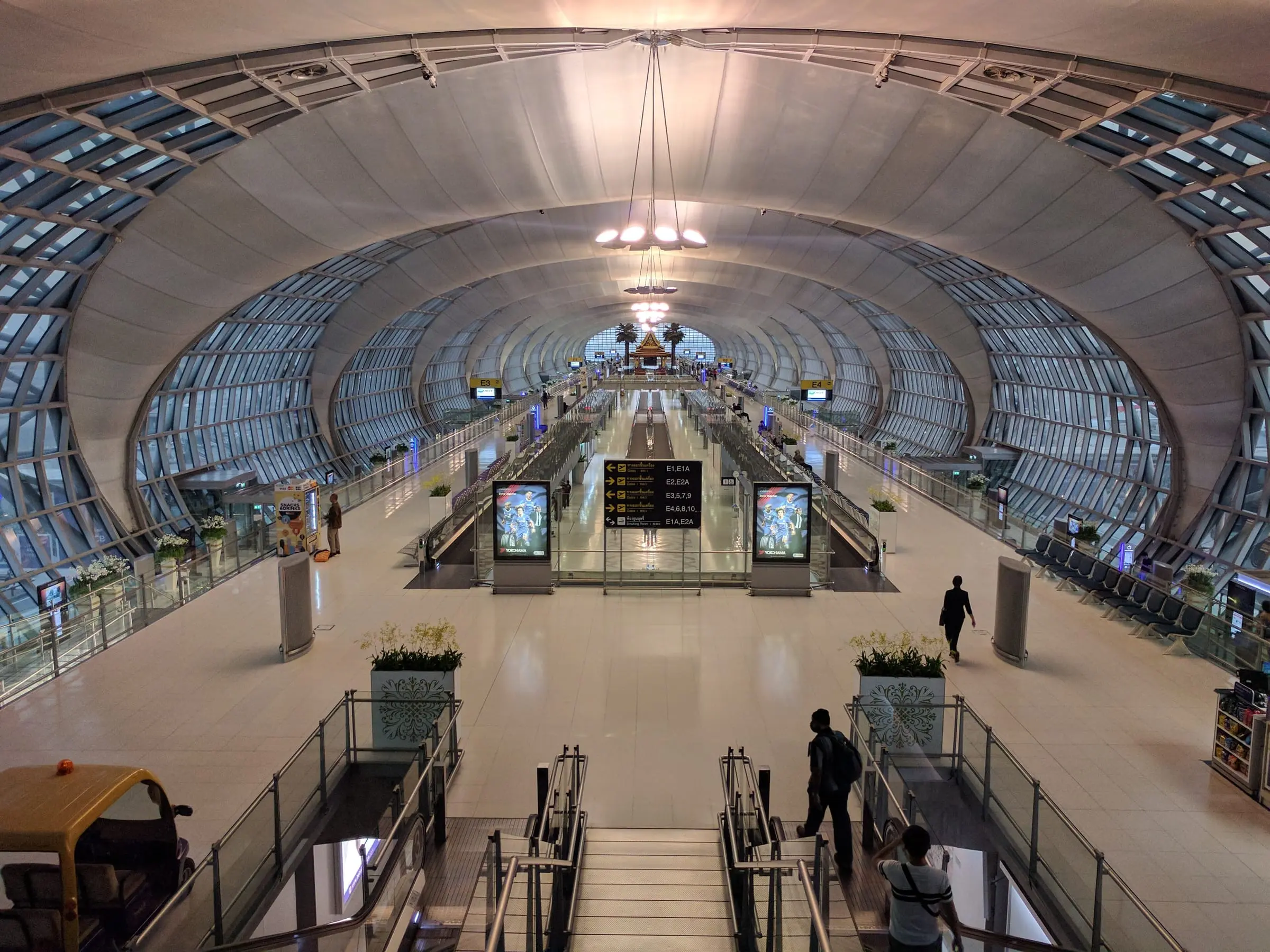
We meet at Athens airport for the overnight flight to Bangkok, usually with one connection in Doha, Dubai or Istanbul. Try to get as much sleep as you can on board.
In winter Thailand is five hours ahead of Greece, so it helps to switch to Bangkok time as soon as you board. Before you travel, you'll need to fill in Thailand's online arrival card (TDAC) within the three days before landing.
- Athens → Bangkok, one connection
- Overnight: On the plane
- Meals: not included
Day 2Bangkok. Overnight: Bangkok
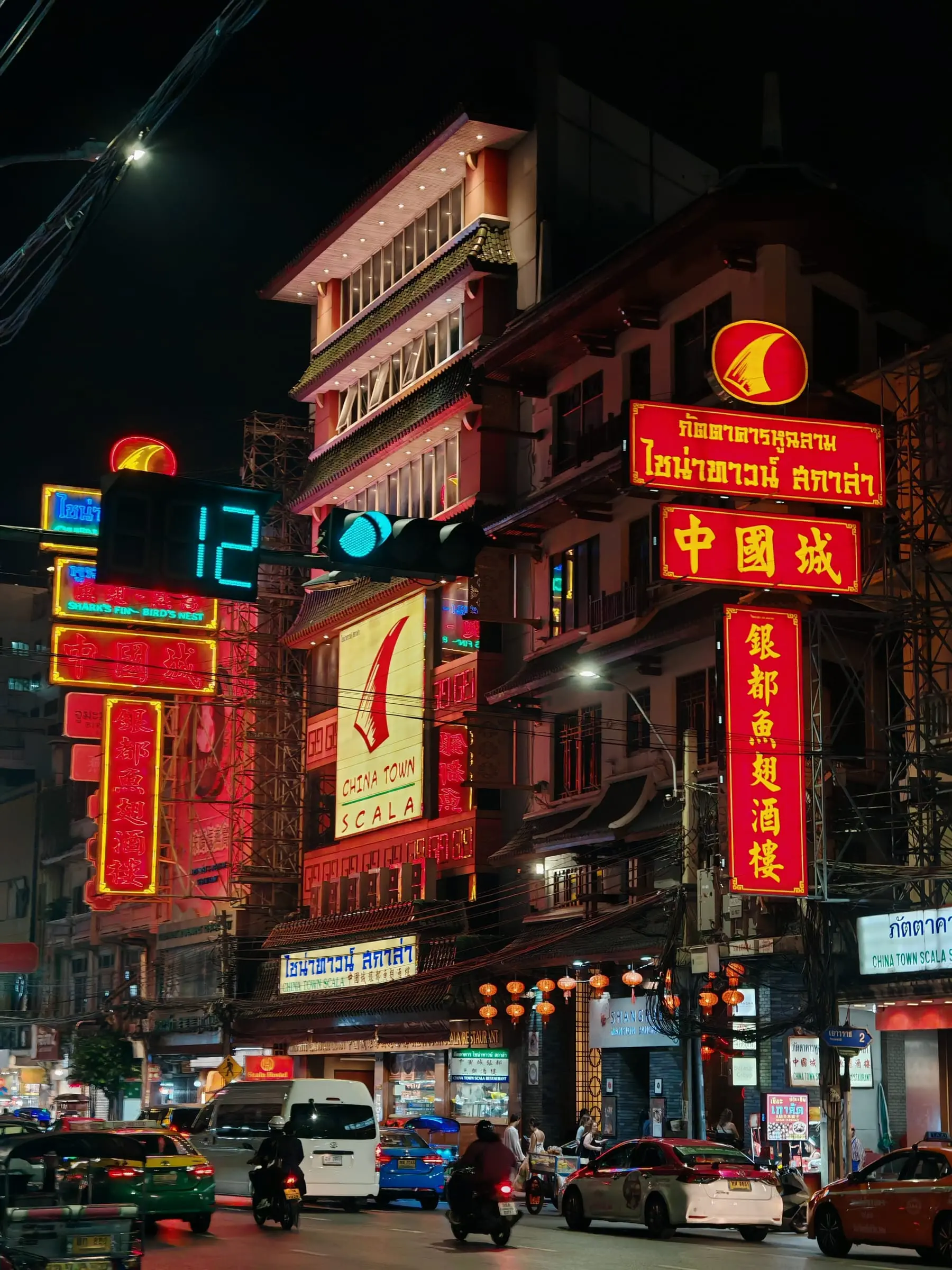
We land at Suvarnabhumi around midday or in the afternoon, depending on the connection, and transfer to the hotel by private minibus (45 minutes to an hour, depending on traffic). The rest of the afternoon is free.
In the evening we walk through Chinatown. After dark, food stalls fill the pavements of Yaowarat Road, selling noodles, grilled seafood and mango with sticky rice. It's worth trying a little of everything.
- Suvarnabhumi → hotel, about 1 h
- Overnight: Bangkok
- Meals: not included
Day 3Bangkok → Chiang Rai. Overnight: Chiang Rai
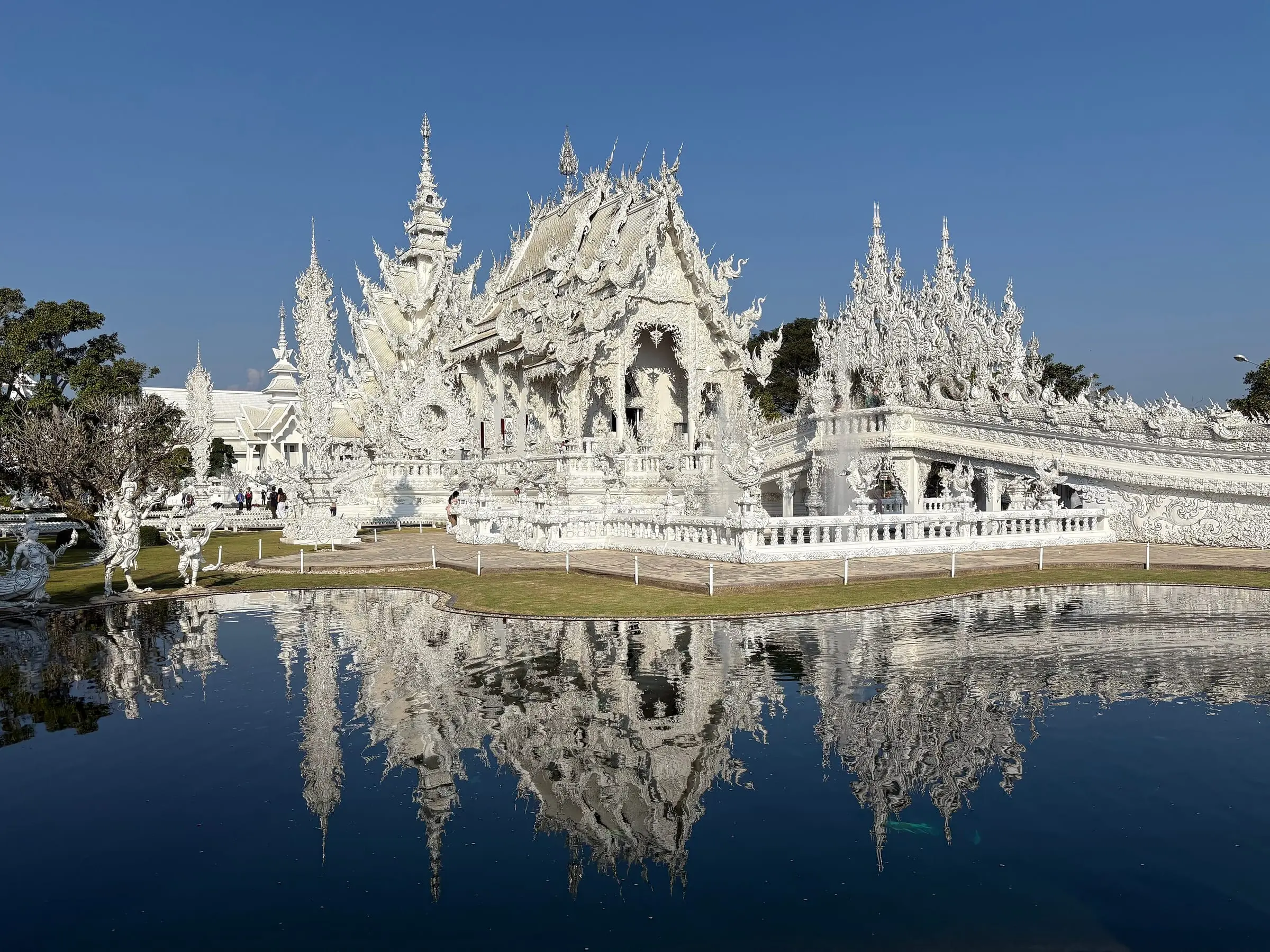
Morning flight north to Chiang Rai. After lunch we visit the White Temple, Wat Rong Khun, the life's work of local artist Chalermchai Kositpipat, who began it in 1997 and is still working on it. From a distance it looks like it's made of icing. You cross a bridge over a pit where hundreds of hands reach up, and the murals inside even include superheroes. Photos are not allowed inside.
In the evening, dinner and a walk at the night bazaar. The gold clock tower in the centre is by the same artist and has a short light show after dark.
- Bangkok → Chiang Rai, about 1 h 20 min
- Overnight: Chiang Rai
- Meals: breakfast
Day 4Chiang Rai → Huay Xai. Overnight: Huay Xai
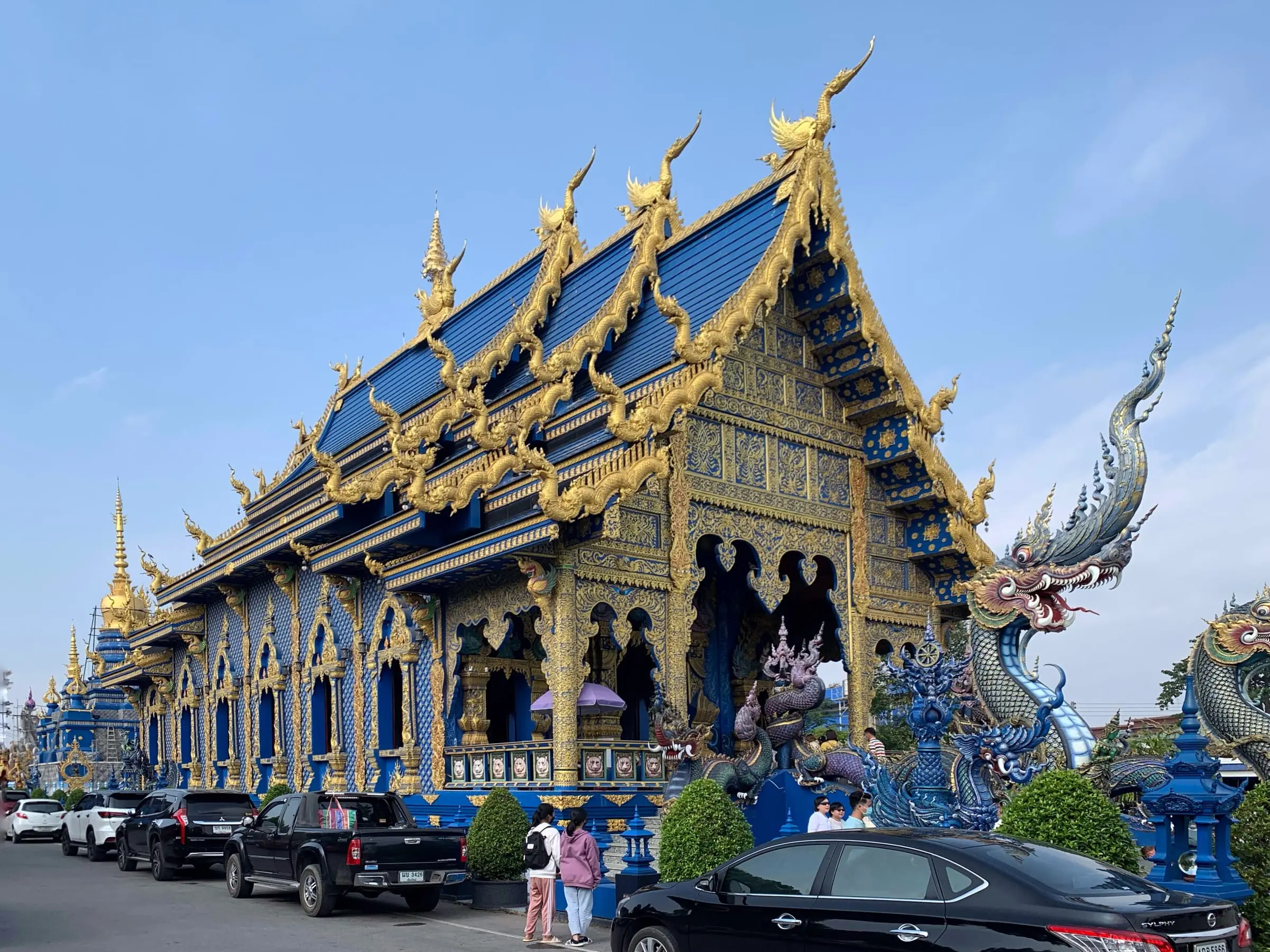
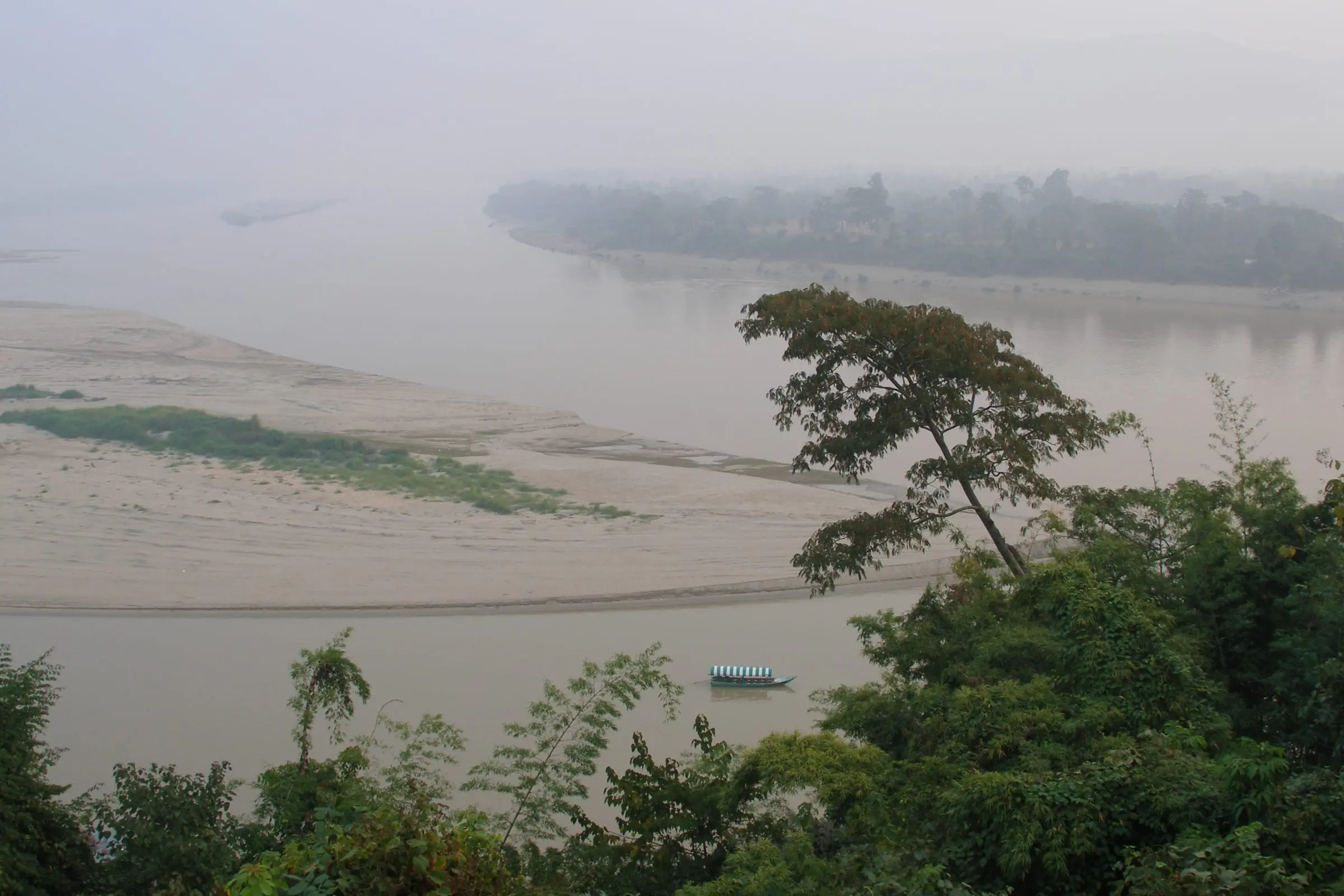
First stop is the Blue Temple, Wat Rong Suea Ten, in deep blue and gold, finished only in 2016 by a pupil of the White Temple's artist. About an hour's drive brings us to Sop Ruak, where the Ruak River flows into the Mekong at the meeting point of Thailand, Laos and Myanmar. This is the Golden Triangle, best seen from the hill above.
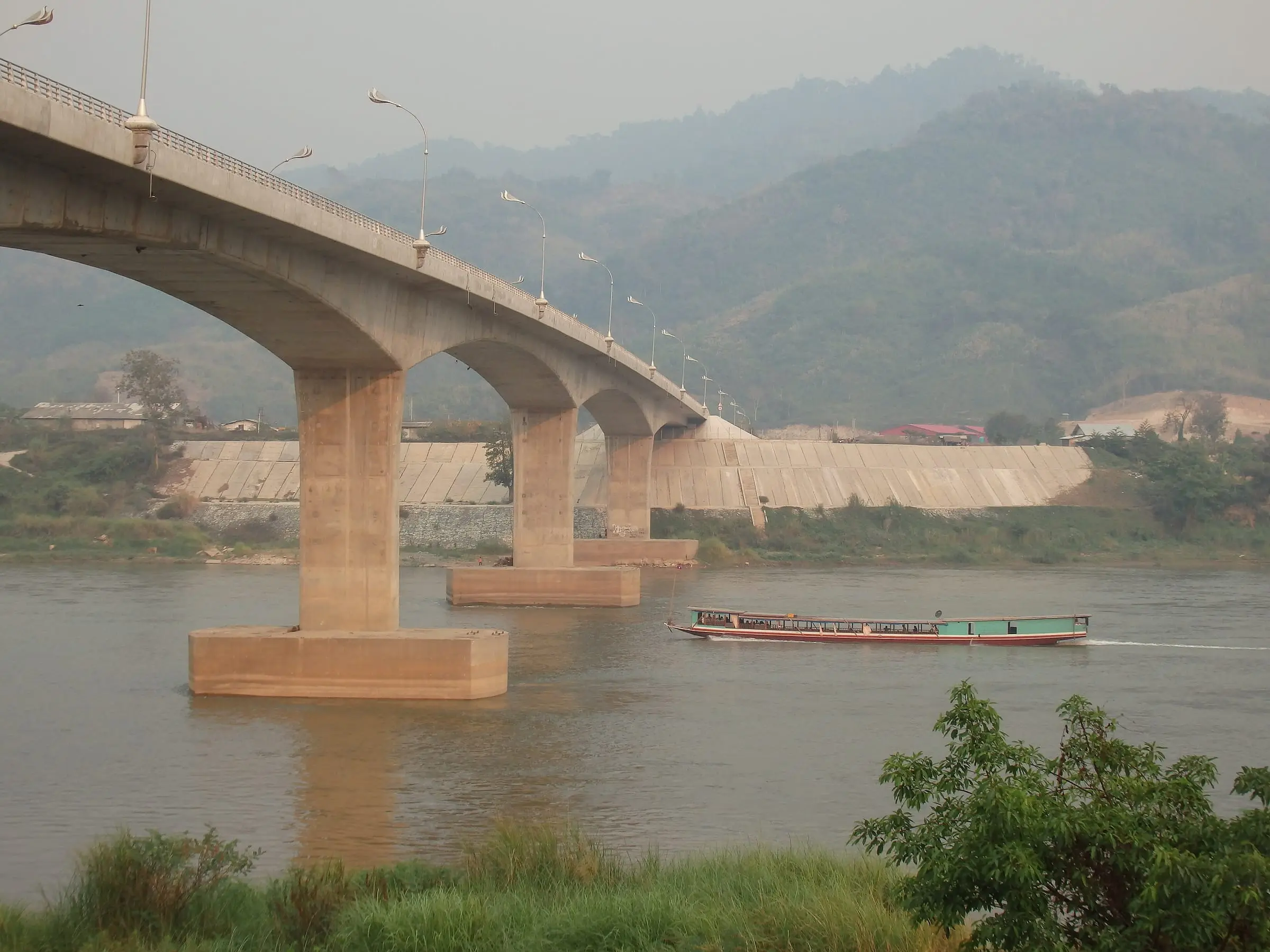
We follow the river to Chiang Khong and cross into Laos over the Fourth Friendship Bridge. It can't be crossed on foot, so we take the shuttle bus. Lao visas are issued on the other side, unless you already have an e-visa. Overnight in Huay Xai.
- Chiang Rai → Golden Triangle → Chiang Khong, about 2 h 30 min of driving
- Fourth Friendship Bridge into Laos
- Overnight: Huay Xai
- Meals: breakfast
Day 5Huay Xai → the treehouses. Overnight: Treehouse, Nam Kan National Park
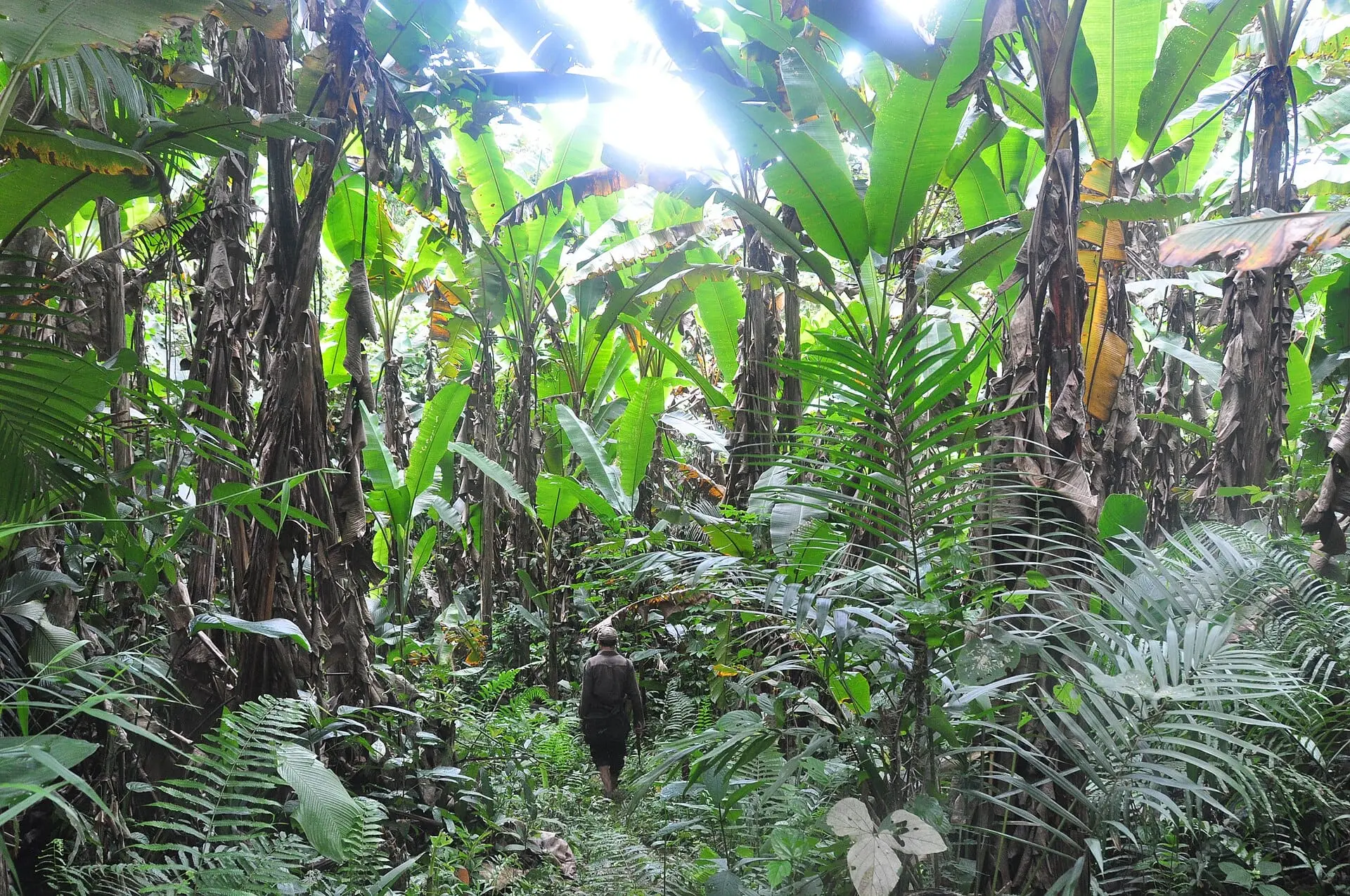
Just after eight we leave from the office of the Gibbon Experience, the conservation project that runs the treehouses. Their trucks take about two and a half hours to Nam Kan National Park, the last part on a rough dirt track, and from there we walk in with the local guides. Main luggage stays locked up in Huay Xai, so you only carry a small backpack.
The first hike is uphill and takes one to two hours. Then we put on harnesses for the ziplines over the treetops, some of them several hundred metres long. We eat and sleep in the treehouse. There's no electricity, so bring a head torch.
- Huay Xai → Nam Kan National Park, about 2 h 30 min
- Hike to the treehouse, 1–2 h uphill
- Overnight: Treehouse, Nam Kan National Park
- Meals: breakfast, lunch, dinner
Day 6In the forest. Overnight: Treehouse, Nam Kan National Park
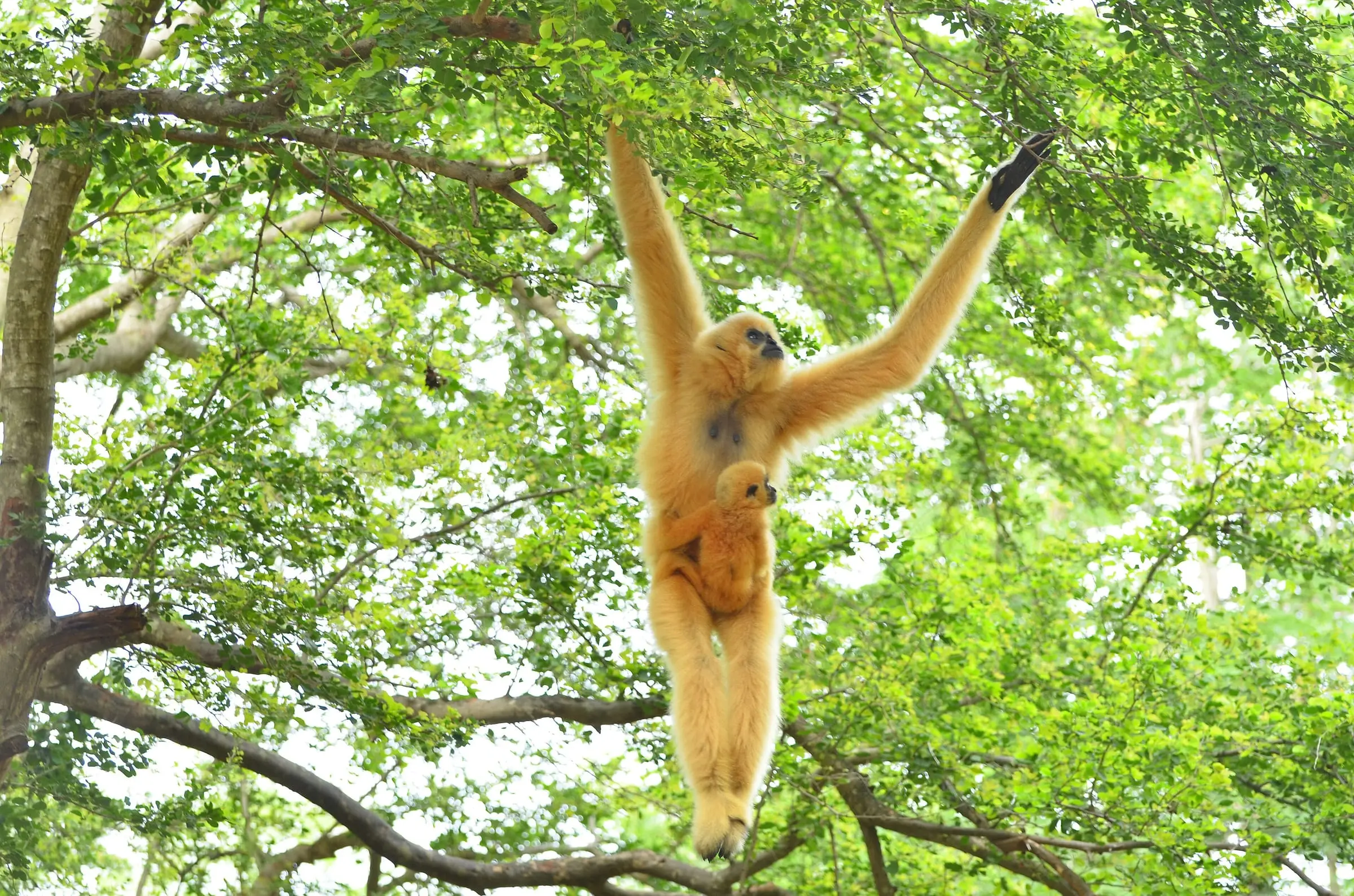
The black-crested gibbons call at first light and their song carries across the valley, so it's worth being awake before dawn. You're very likely to hear them. Whether you see them depends on where they are that week, so bring binoculars.
The rest of the day is flexible. We walk the forest trails with the guides, try the longer ziplines and go back to the treehouse whenever we like. The guides bring the meals, sometimes along the zipline. Second night in the treehouse.
- Overnight: Treehouse, Nam Kan National Park
- Meals: breakfast, lunch, dinner
Day 7Treehouses → Huay Xai. Overnight: Huay Xai
Breakfast in the treehouse, one more chance to hear the gibbons and a few last ziplines, then we hike out to meet the truck. We're back in Huay Xai between three and four in the afternoon, in time for a hot shower.
Huay Xai is really just one long street by the river. In the evening you can sit on the bank of the Mekong with a cold Beerlao and watch the lights come on across the water in Thailand.
- Hike out of the forest
- Nam Kan → Huay Xai, about 2 h 30 min
- Overnight: Huay Xai
- Meals: breakfast, lunch
Day 8Huay Xai → Pakbeng. Overnight: Pakbeng
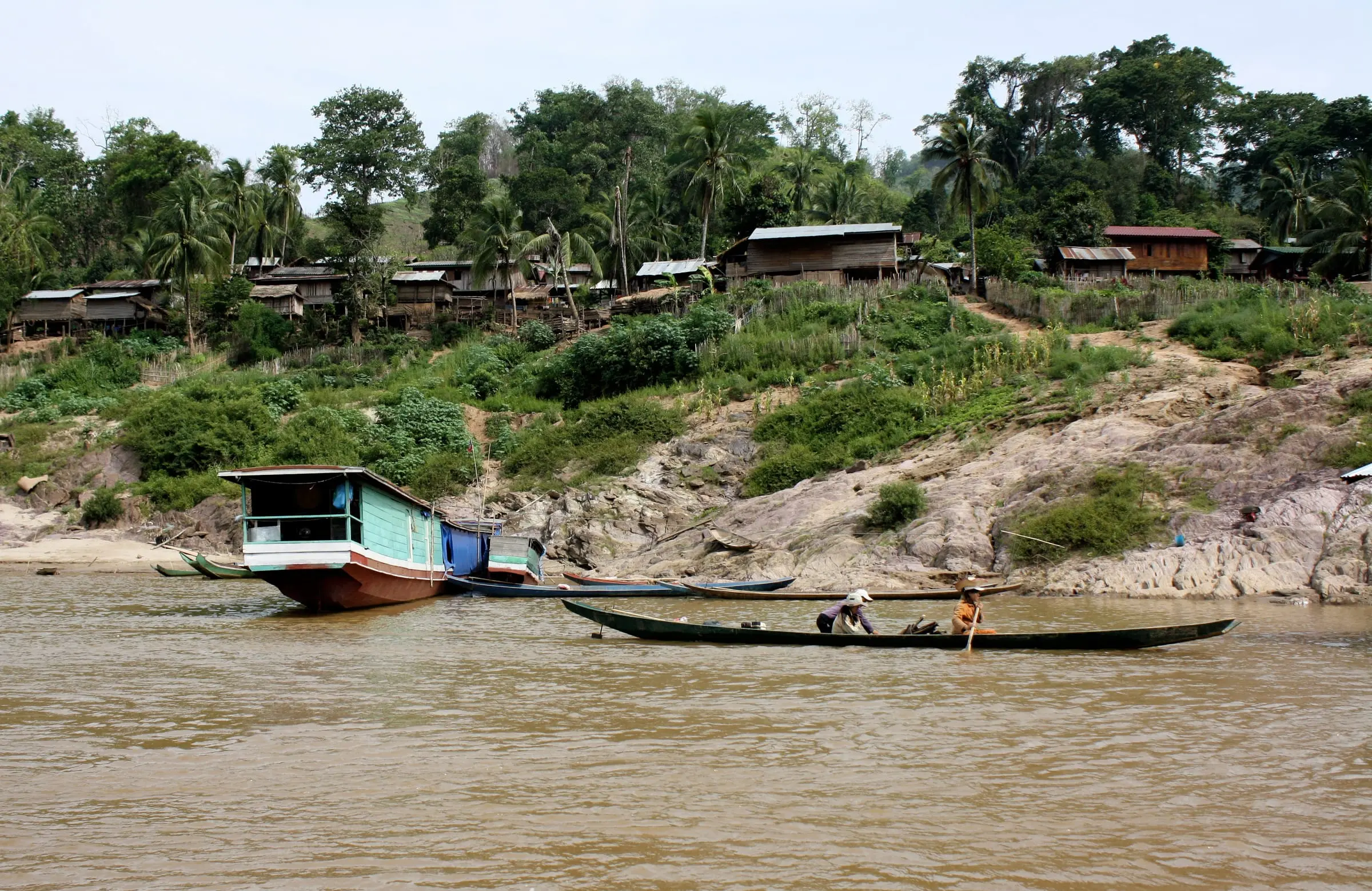
We board the slow boat for six to seven hours down the Mekong, past sandbanks, fishermen, water buffalo in the shallows and children waving from the bank. Lunch is served on board, and there's plenty of time to read or just watch the river.
We reach Pakbeng in the late afternoon. It's a small village on the hillside above the river that lives mainly off the boats stopping overnight. We watch the sun set over the river, have an early dinner and stay in a simple lodge.
- Slow boat, Huay Xai → Pakbeng, 6–7 h
- Overnight: Pakbeng
- Meals: breakfast, lunch
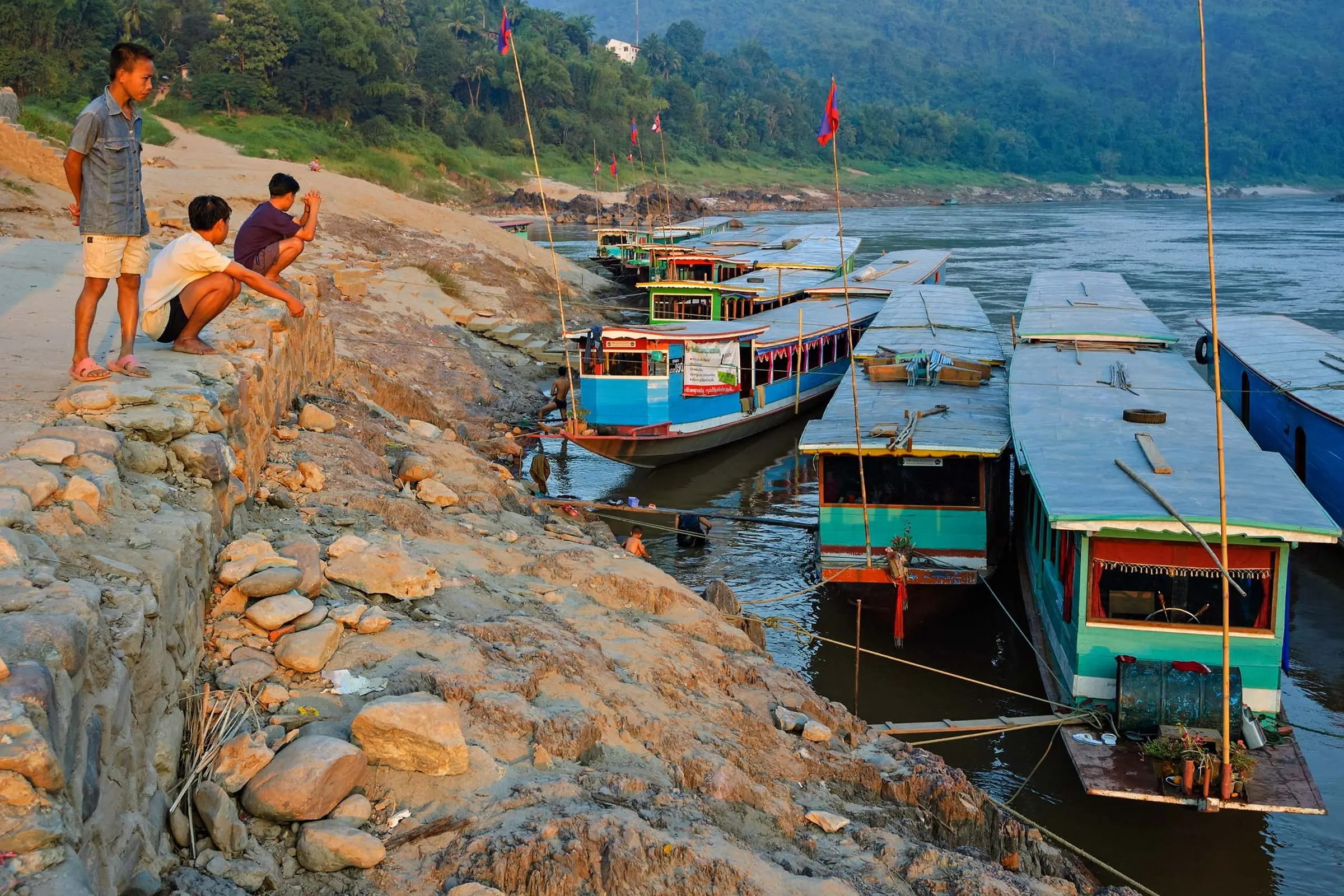
Day 9Pakbeng → Luang Prabang. Overnight: Luang Prabang
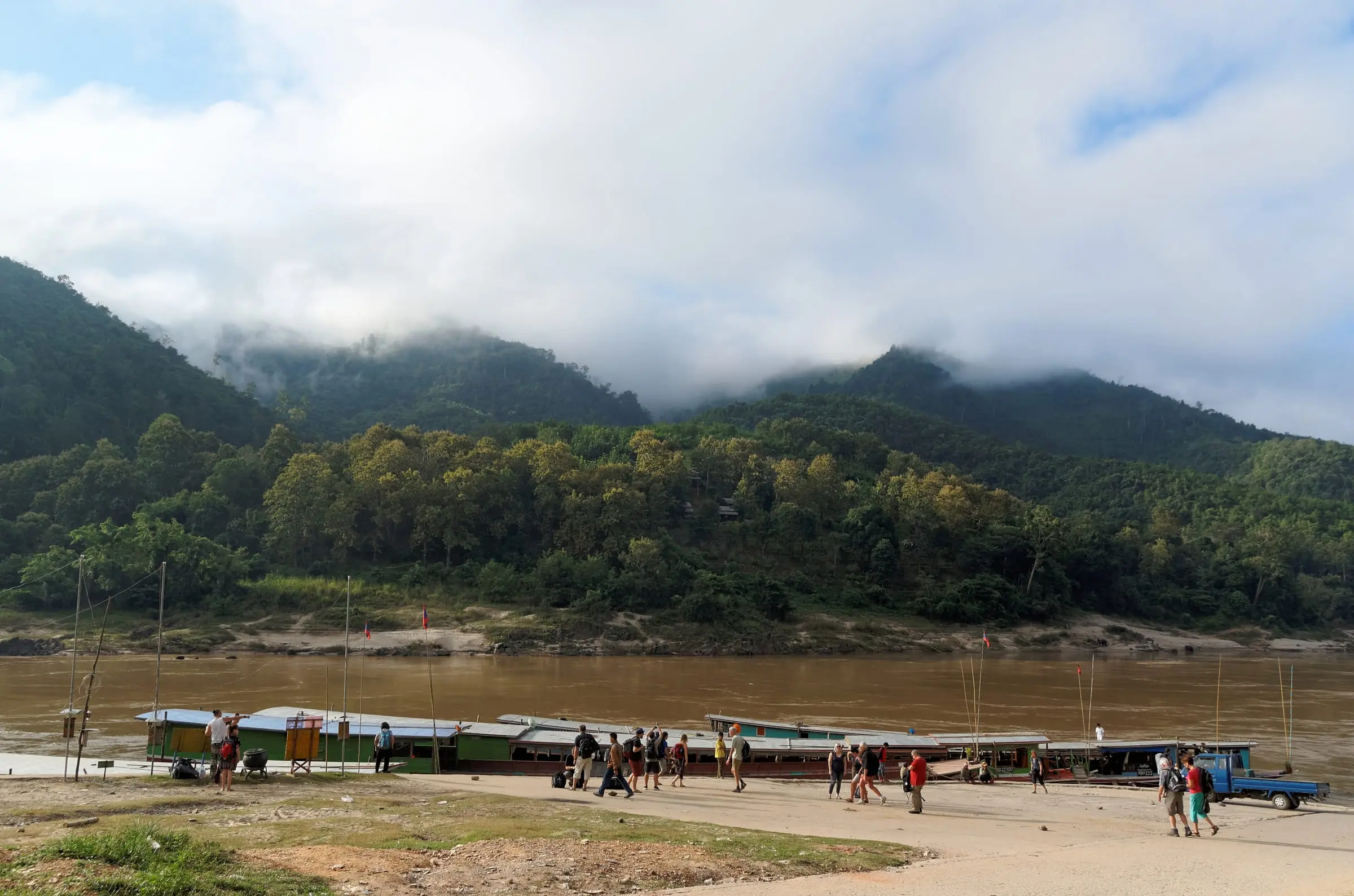
Our second day on the river. In the afternoon we stop at the Pak Ou Caves, two caves in a limestone cliff filled with thousands of Buddha statues left there by worshippers over the centuries. A large dam is being built just upriver of the caves. If the works close the river to our boat, we continue by road and visit the caves from Luang Prabang.
We reach Luang Prabang around sunset. The old town sits on a peninsula between the Mekong and the Nam Khan and is small enough to explore on foot. Dinner near the hotel.
- Slow boat, Pakbeng → Luang Prabang, about 8–9 h with a stop at the Pak Ou Caves
- Overnight: Luang Prabang
- Meals: breakfast, lunch
Day 10Luang Prabang. Overnight: Luang Prabang
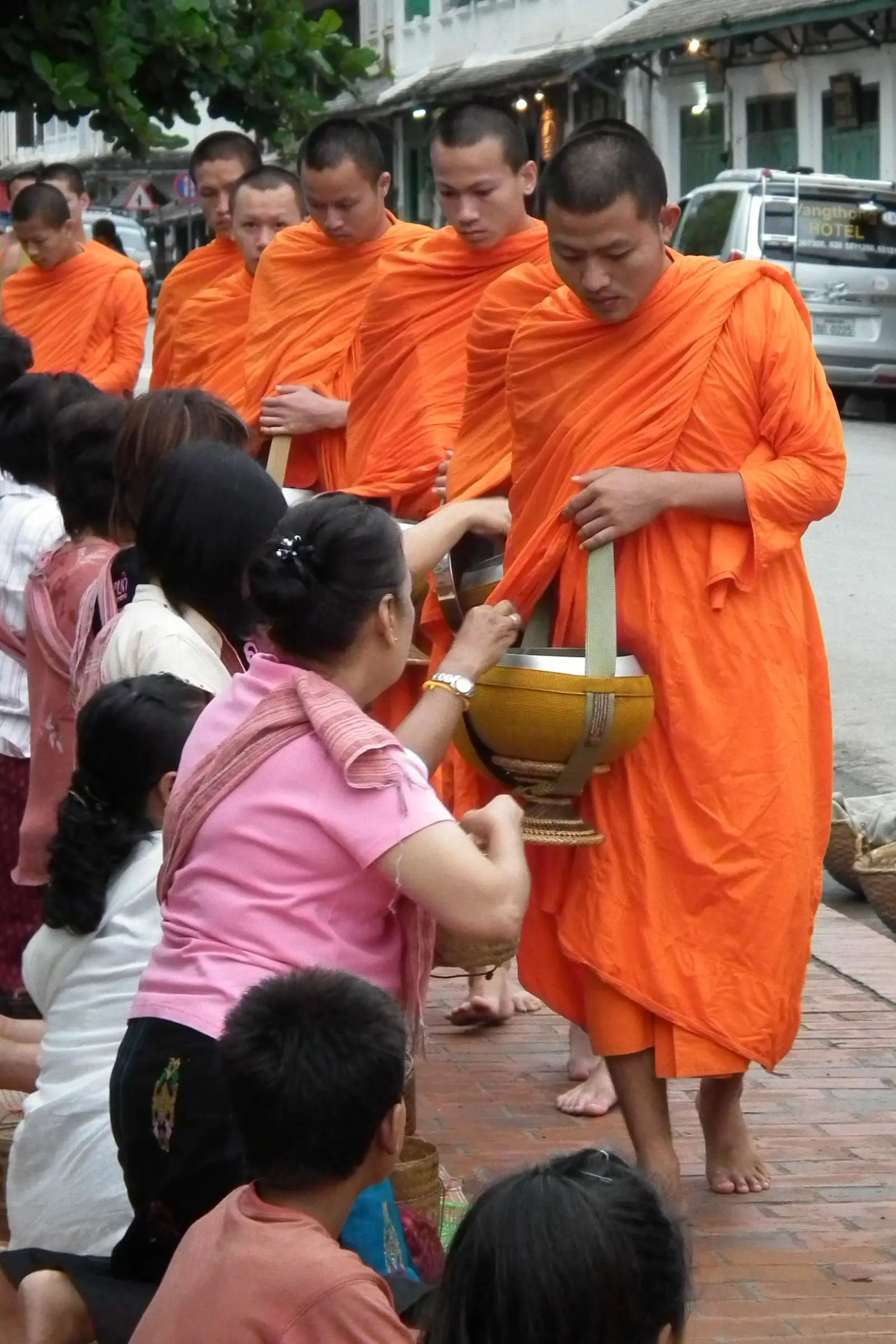
An early start to see the alms round. Before sunrise, lines of monks in orange robes walk along the main street collecting sticky rice. We watch quietly from the opposite pavement, without flash. Please don't step into their path for photos, and only take part if it means something to you.
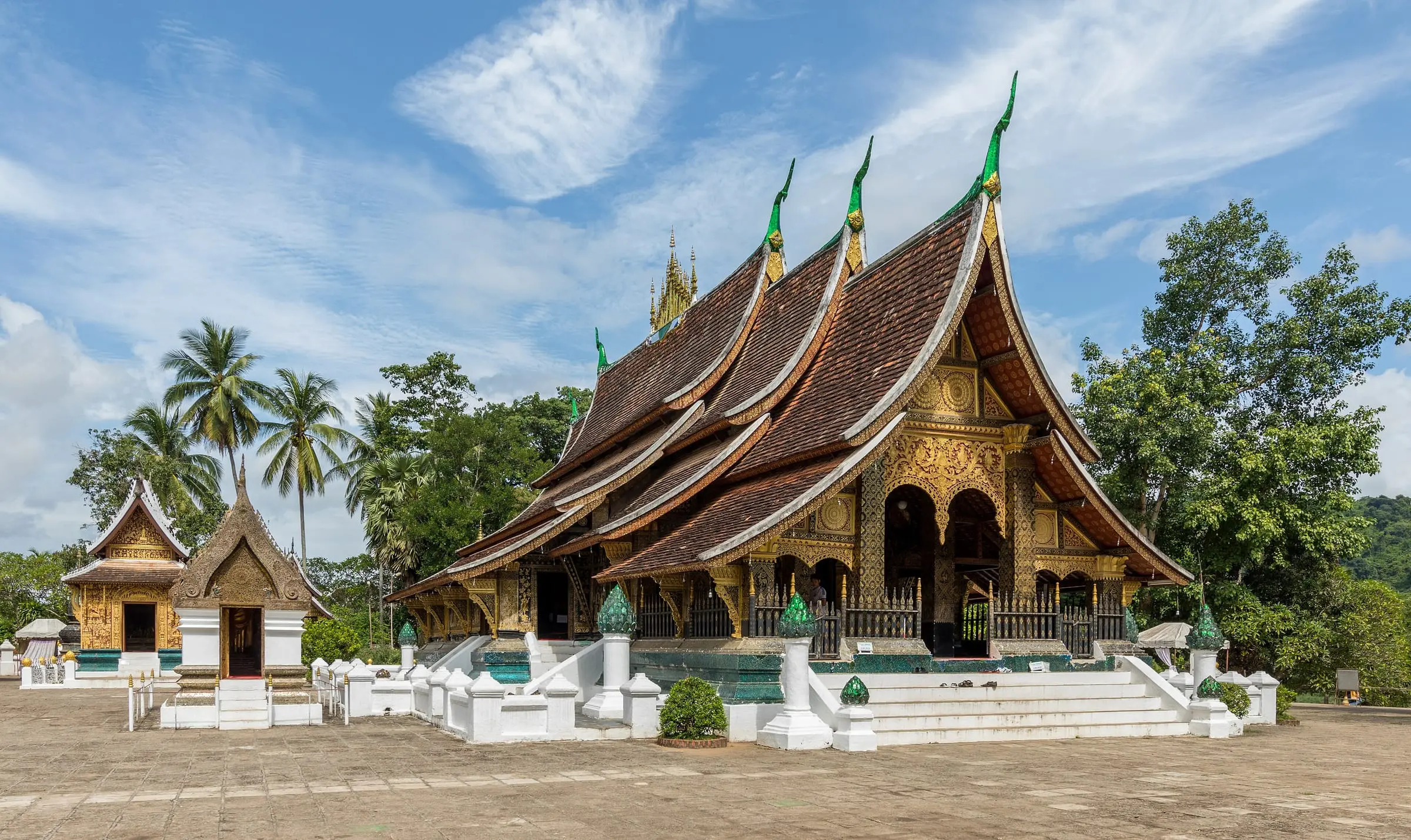
After breakfast, a morning tour with our local guide, starting at Wat Xieng Thong, the town's finest temple, with low sweeping roofs and a tree of life in glass mosaic on the back wall. At sunset we climb the few hundred steps of Mount Phousi and end the day at the night market.
- Overnight: Luang Prabang
- Meals: breakfast
Day 11Kuang Si Falls. Overnight: Luang Prabang
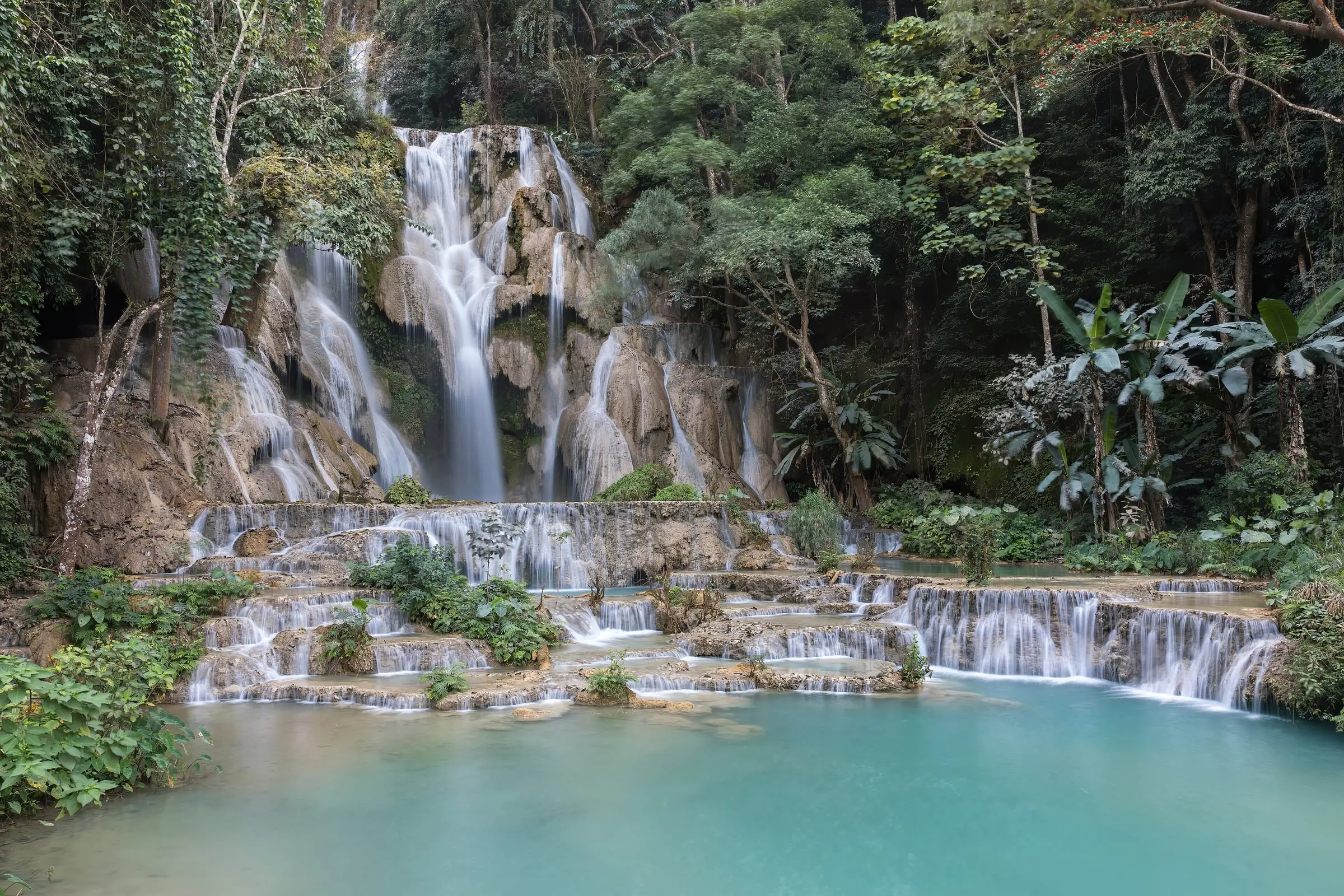
Forty-five minutes south of town, the Kuang Si Falls run down limestone terraces into turquoise pools. A path leads up to the top, and swimming is allowed in some of the pools, so bring a swimsuit. By the entrance there's a rescue centre for bears saved from poachers and bile farms.
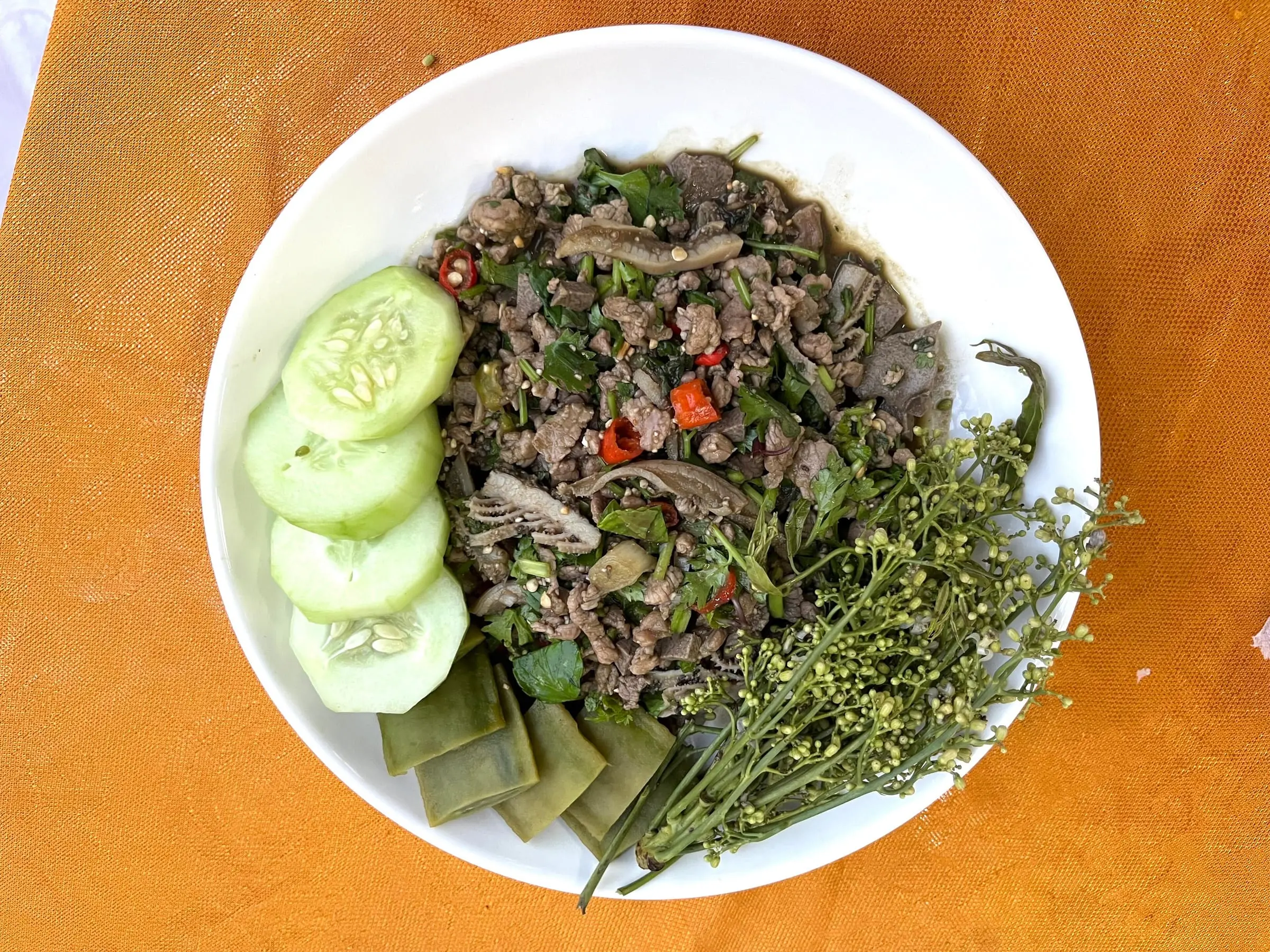
We're back in town by early afternoon, and the rest of the day is free for a massage, a coffee by the river or a rest. In the evening we have a group dinner of Lao food. Try the laap (minced meat with herbs, lime and toasted rice), eaten by hand with sticky rice.
- Luang Prabang ↔ Kuang Si, 45 min each way
- Overnight: Luang Prabang
- Meals: breakfast, dinner
Day 12Luang Prabang → Nong Khiaw. Overnight: Nong Khiaw
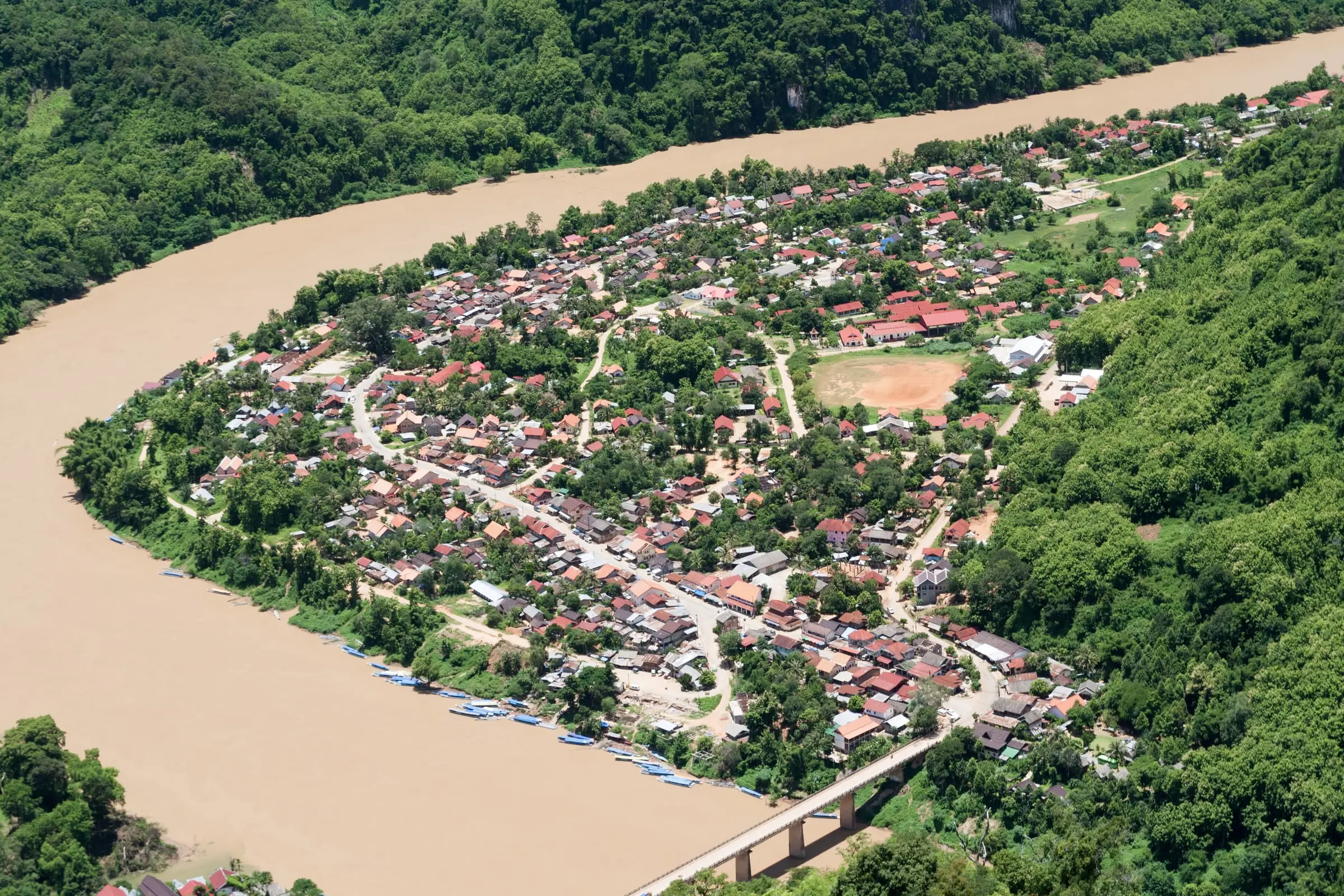
We drive north along the Nam Ou valley, about four hours on a winding road past rice fields and villages. Nong Khiaw lies on both banks of the river, joined by a bridge, under steep limestone peaks.
In the late afternoon, anyone who wants to can hike up to the viewpoint above the village. It takes an hour to an hour and a half and is steep and rocky in places. From the top you look out over the whole valley at sunset. Bring a head torch for the way down.
- Luang Prabang → Nong Khiaw, about 4 h
- Overnight: Nong Khiaw
- Meals: breakfast
Day 13Muang Ngoi Neua. Overnight: Nong Khiaw
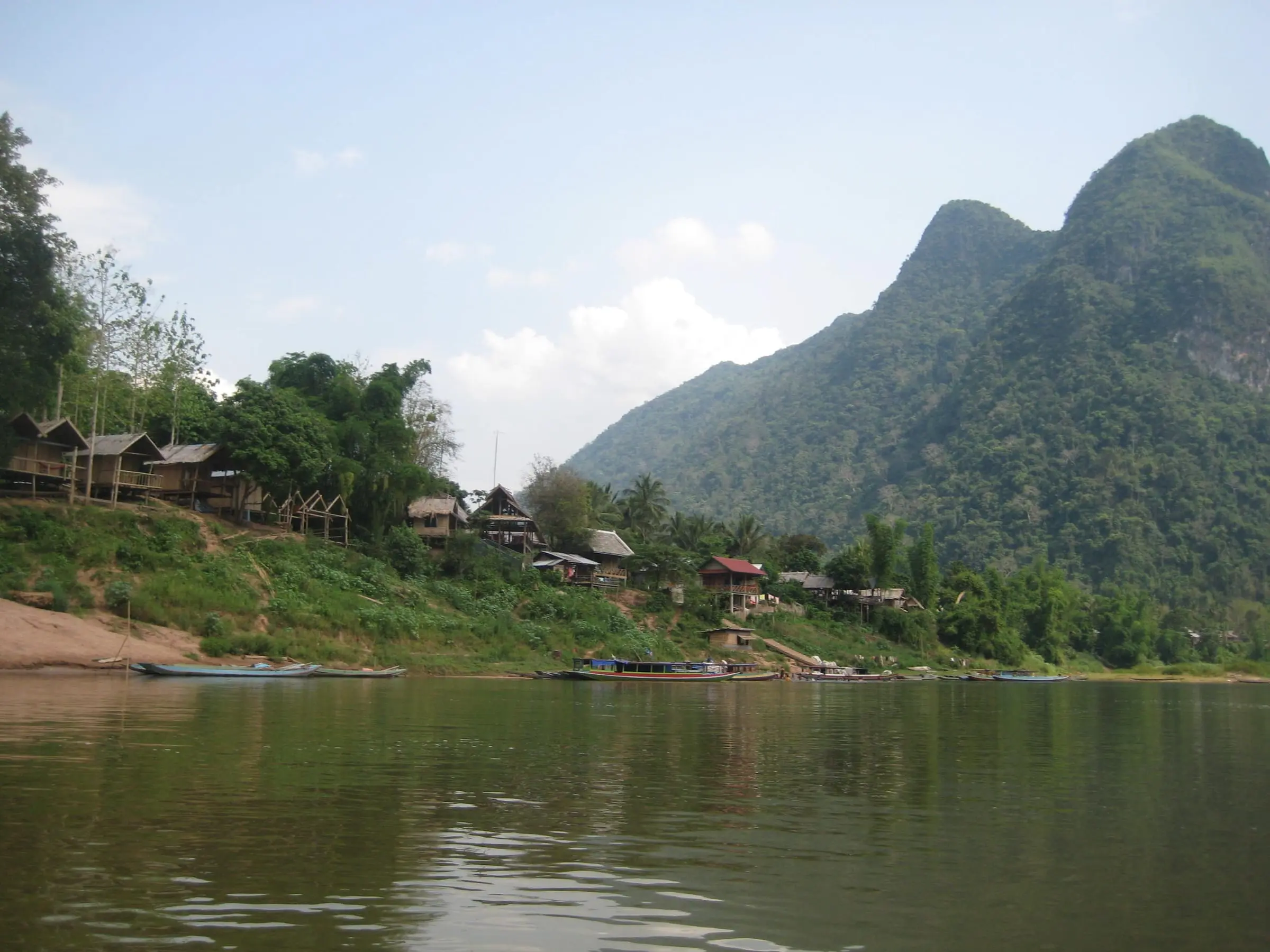
A narrow wooden boat takes us an hour upriver to Muang Ngoi Neua, past cliffs, fishermen and children swimming off the rocks. The village is a single dirt street of wooden houses, guesthouses and hammocks.
From there we walk through the rice paddies to nearby villages and to a cave where local people sheltered from American bombing in the 1960s and early 70s. Lunch by the river, then back to Nong Khiaw by boat in the afternoon.
- Nong Khiaw ↔ Muang Ngoi Neua, about 1 h each way
- Overnight: Nong Khiaw
- Meals: breakfast
Day 14Nong Khiaw → Siem Reap. Overnight: Siem Reap
The longest travel day of the trip. We leave Nong Khiaw at seven for the four-hour drive back to Luang Prabang, then fly to Siem Reap in Cambodia. In season there's a direct flight of about an hour and a half on some days of the week, and we try to plan the dates around it. Otherwise we fly via Bangkok or Hanoi, and our arrival time depends on the connection.
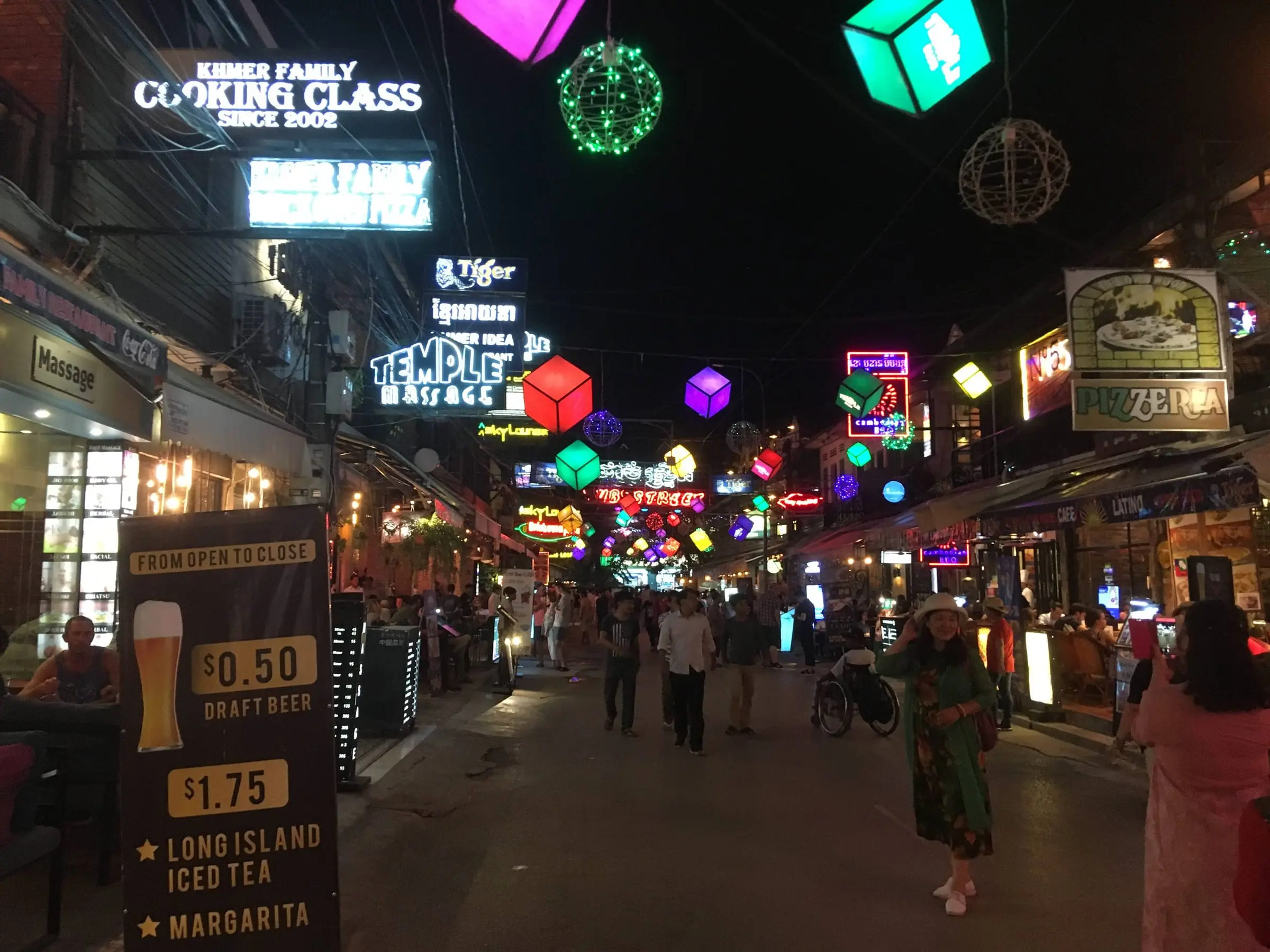
Siem Reap's new airport is about an hour from town. If you still have the energy, Pub Street is lively and cheap, a good spot for your first Cambodian beer. Otherwise, an early night.
- Nong Khiaw → Luang Prabang, about 4 h
- Luang Prabang → Siem Reap, direct or via Bangkok / Hanoi
- Airport → Siem Reap, about 1 h
- Overnight: Siem Reap
- Meals: breakfast
Day 15Angkor. Overnight: Siem Reap
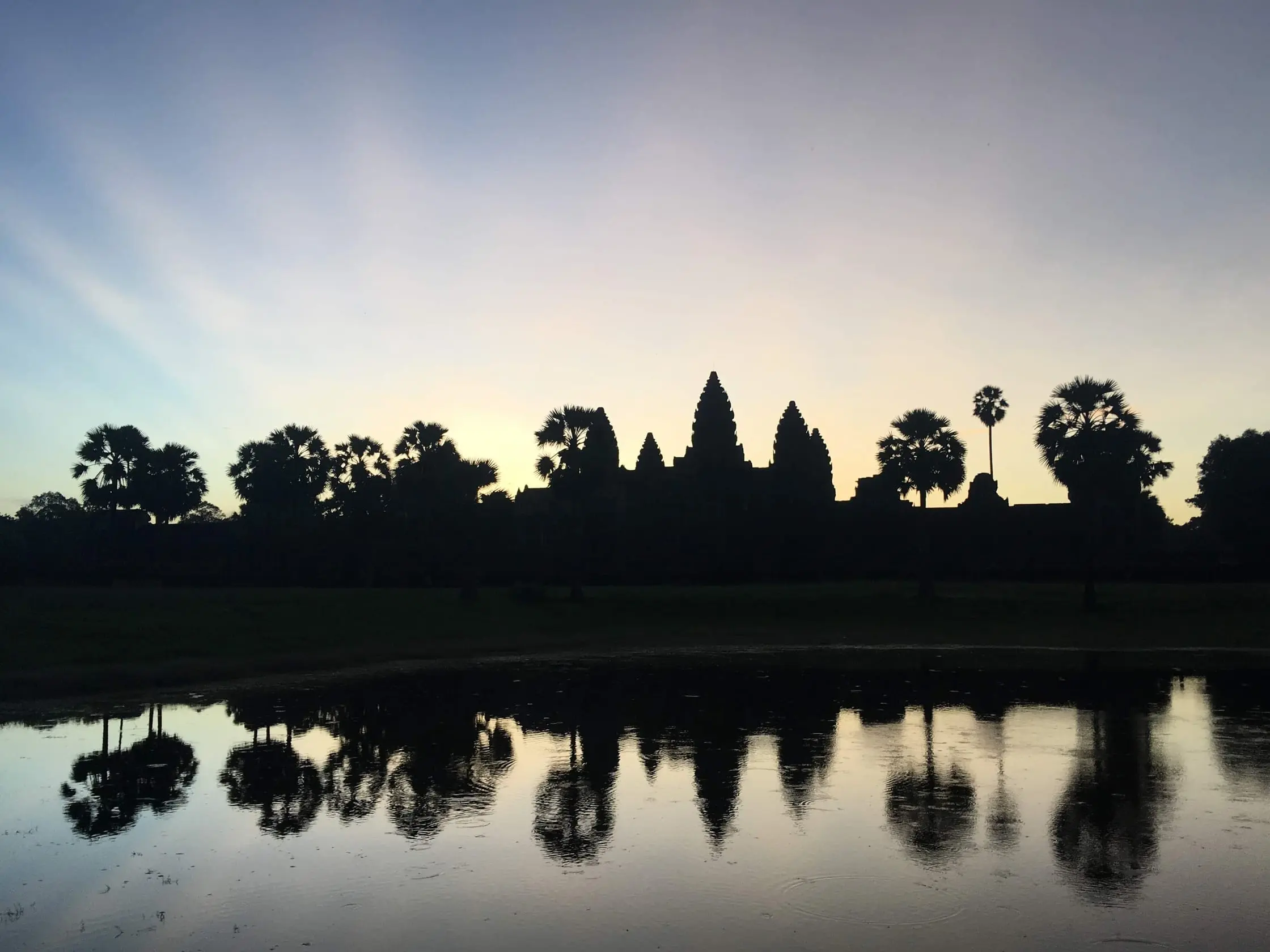
We get up at 4.30 to reach Angkor Wat in the dark and watch the sun rise behind the towers, then go inside while it's still cool. Shoulders and knees must be covered for the upper level, and staff do check (a scarf over a vest top often isn't enough). The upper level can close on Buddhist holidays.
After breakfast we continue with our guide to the Bayon in Angkor Thom, with its huge, calm stone faces, and to Ta Prohm, where trees have grown over the walls. After a midday break we visit Preah Khan, which is quieter. In the evening, a farewell dinner with Khmer food.
- Overnight: Siem Reap
- Meals: breakfast, dinner
Day 16Siem Reap → Athens
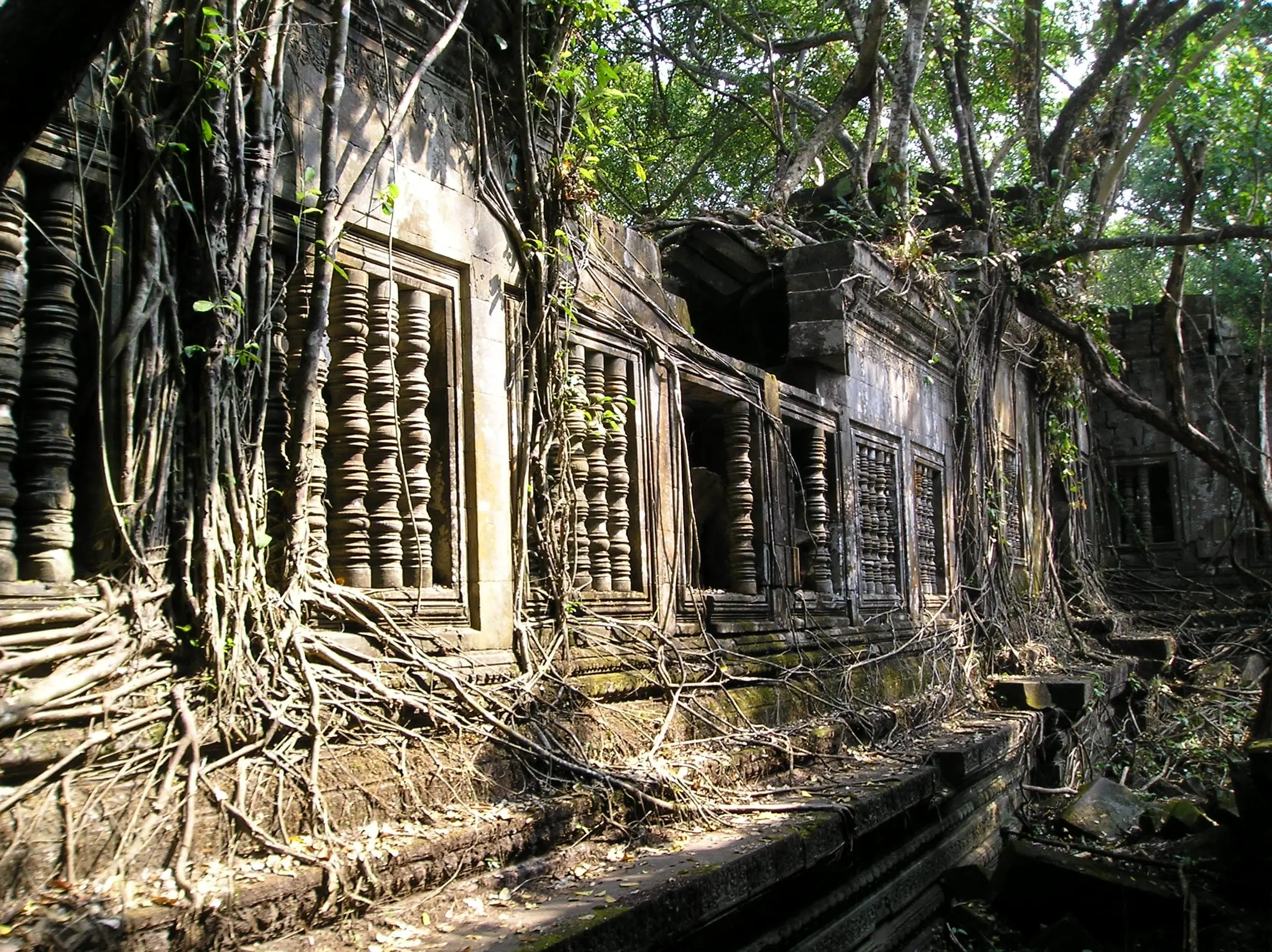
If the flight time allows, we stop at one last temple on the way to the airport. Beng Mealea, about an hour and a half east of town and close to the new airport, is a large ruin overgrown by the jungle, with collapsed galleries and tree roots everywhere. Otherwise the morning is free for the old market, a massage or a last iced coffee.
Then the flight home, with a connection. Depending on the route, we land in Athens late the same night or early the next morning.
- Optional: Beng Mealea, then the airport
- Siem Reap → Athens, with a connection
- Meals: breakfast


What's included
Included
- Return flights from Athens and the internal flights (Bangkok–Chiang Rai, Luang Prabang–Siem Reap), including taxes
- 12 nights in selected hotels and guesthouses, and 2 nights in the Gibbon Experience treehouses
- Breakfast daily from day 3, and the meals shown in the itinerary
- Road transfers by private minibus with driver (the Gibbon Experience uses its own trucks to reach the forest)
- The Gibbon Experience (3 days, 2 nights), with guides, ziplines and meals in the forest
- Two days on a Mekong slow boat with lunch on board, and the Nam Ou boat to Muang Ngoi
- English-speaking local guides in Luang Prabang and at Angkor
- Entrance fees for all sites in the itinerary, including the Angkor pass
- A REA TRAVEL tour leader from Athens for groups of 10 or more
- 24-hour phone support throughout the trip
Not included
- Visas for Laos and Cambodia (on arrival or online)
- Travel insurance, which we strongly recommend. Check that it covers ziplining
- Lunches and dinners not listed in the itinerary
- Drinks, tips and personal expenses
- Optional extras, such as the morning visit to Beng Mealea
Good to know
Best time to go
November to February is the dry season and the coolest time of year. Bangkok and Siem Reap still reach the low 30s °C at midday, while nights in northern Laos can drop to around 10°C, with thick morning mist on the rivers. From March there's smoke in the north from field burning and it gets hotter. May to October is the rainy season.
Passports and visas
Your passport must be valid for at least six months from the date of entry and have a few blank pages. With a Greek passport you can currently visit Thailand as a tourist for up to 30 days without a visa, but you must fill in the online arrival card (TDAC) within the three days before you land. For Laos, you can get a visa on arrival at the bridge (bring clean US dollar notes and one or two passport photos) or an e-visa in advance. Laos also asks for an online immigration form (LDIF) within the three days before entry, and again before you leave. For Cambodia you need an e-visa or a visa on arrival, plus the online e-Arrival form. These rules change often, so check the official websites before you fly. We'll send you the latest links.
Health
See your doctor or a travel clinic six to eight weeks before departure about the vaccinations you need. Mosquitoes are the main nuisance and dengue is present in all three countries, so bring a strong repellent and long sleeves for the evenings. Drink only bottled or filtered water. Bring your medicines in their original packaging, with enough for a few extra days.
Money
You'll use three currencies. Thailand uses the baht, and cards are accepted in cities, but you'll need cash for street food. In Laos it's the kip, and you'll mostly pay cash. There are ATMs in Huay Xai and Luang Prabang but few elsewhere, and kip is hard to exchange outside the country, so spend it before you leave. In Cambodia most prices are in US dollars, with small change in riel. Bring clean, untorn dollar notes, as worn ones are often refused.
What to pack
Light, quick-drying clothes and a warm layer for the evenings in the north. For the temples, clothes that cover shoulders and knees, and shoes you can slip off easily, as you'll take them off often. For the treehouses you'll need a small backpack (main luggage stays at the office in Huay Xai), closed walking shoes and a head torch, which is compulsory. And don't forget a swimsuit for Kuang Si.
Fitness
The Gibbon Experience is the only part that needs some fitness, with one to two hours of uphill walking a day on forest trails and ziplining in a harness. The organisers recommend it for ages 8 to 65, and the ziplines have a weight limit. We check both for your group. The rest of the trip is easy, with walking in towns and temples and two optional climbs (Mount Phousi and the Nong Khiaw viewpoint). If someone would rather skip the forest, we plan an easier alternative for those days.
Photos


Questions about this trip
Can we change the dates or the itinerary?
Yes. You choose the dates, and we can add days, leave out the treehouses or finish on a beach in Thailand. Some parts run only on certain days of the week (the Mekong boats we use and the direct flight to Siem Reap), so the start date has to fit around them. You could also add the Elephant Conservation Center near Sainyabuli, about three hours from Luang Prabang, with at least one night there. It's a sanctuary, and visitors watch the elephants but don't ride them.
How big can the group be?
The trip works best for six to sixteen people. Smaller groups are possible, but the price per person is higher. In the forest the Gibbon Experience works in groups of up to eight, so a larger group splits into two or three for those three days, each with its own guides.
Do we need to be very fit?
No. Only the three days in the forest need reasonable fitness. Anyone who prefers to skip them can stay on in Chiang Rai and rejoin the group in Huay Xai on day 7. We arrange the transfers.
Can we fly from Thessaloniki?
Yes, usually via Istanbul or another hub, which can add a few hours to the journey. When you ask for a quote, let us know where each person is flying from.
How much does it cost, and how do we pay?
It depends on the dates, the size of the group and the hotels you choose, so there's no fixed price. Send us your dates and numbers and we'll send you a detailed quote. Once you confirm, you pay a deposit, and the balance is due before departure, as agreed in writing.
How early should we book?
For travel between November and February, it's best to book six to nine months ahead. The treehouses have limited places, and flights around Christmas and New Year fill up early.
Interested in this trip?
Send us rough dates and the size of your group, and we'll reply with an itinerary and a price per person.
Photo credits
Photos from Wikimedia Commons, used under the licences shown. All have been resized for the web and some cropped.
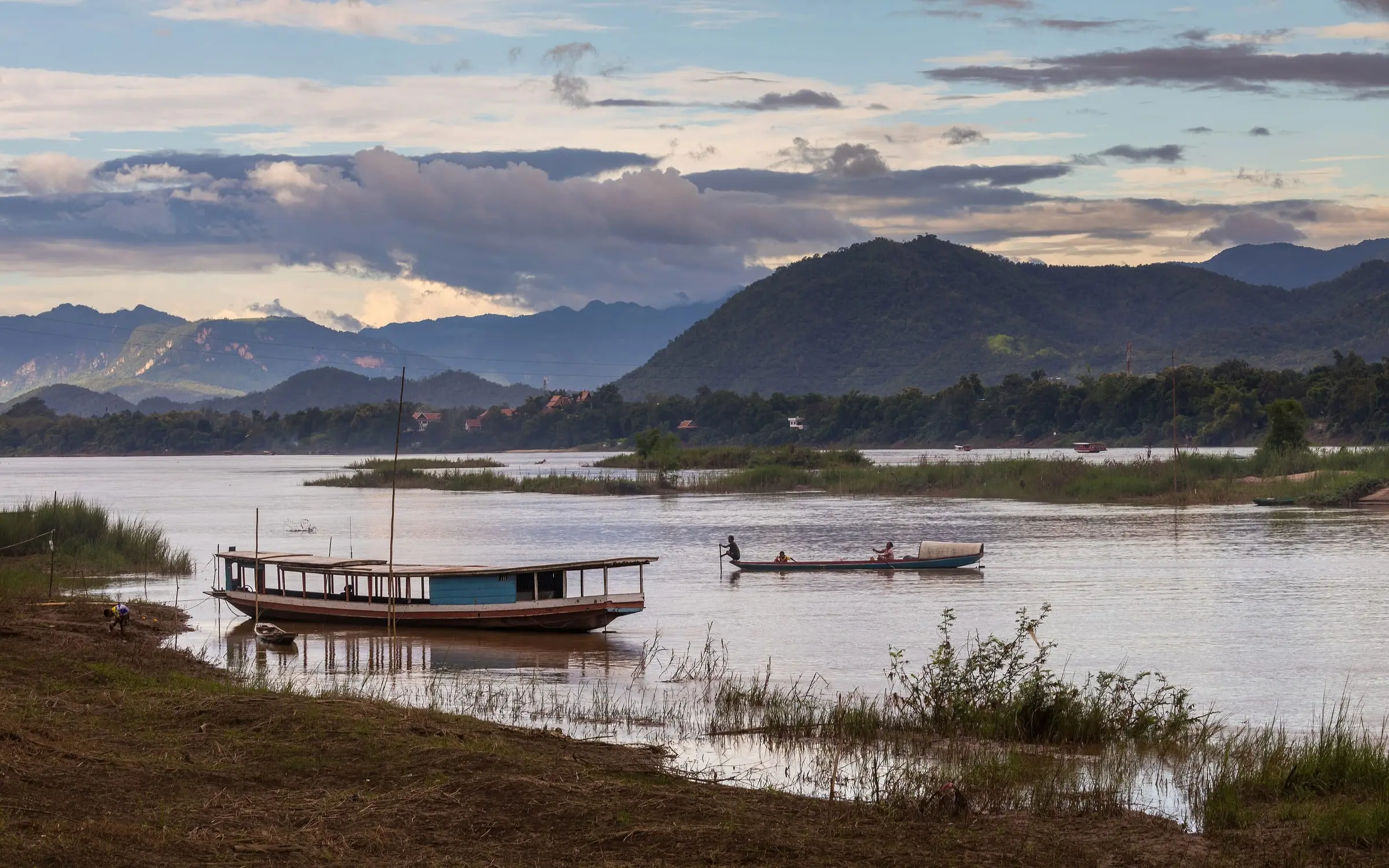
- A wooden riverboat and a long canoe on the Mekong at dusk, mountains beyond — Basile Morin, CC BY-SA 4.0
- Curved glass-and-steel roof over a quiet concourse at Bangkok's Suvarnabhumi Airport — Grendelkhan, CC BY-SA 3.0
- Neon signs in Chinese and Thai over night-time traffic in Bangkok's Chinatown — Deepak-nsk, CC0
- The intricately carved, all-white Wat Rong Khun reflected in a still pond under a clear blue sky — Chainwit., CC BY 4.0
- Blue-and-gold Wat Rong Suea Ten in Chiang Rai, flanked by naga serpent statues — Chainwit., CC BY-SA 4.0
- The wide, hazy Mekong at the Golden Triangle, with a sandbank and a lone boat — Vyacheslav Argenberg, CC BY 4.0
- A man walks a narrow trail through dense banana and palm forest in northern Laos — Rds26, CC BY-SA 4.0
- A golden female gibbon hangs from the branches by both arms, her baby clinging to her chest — Kongkham6211, CC BY-SA 4.0
- A long wooden slow boat on the Mekong beside the Fourth Thai–Lao Friendship Bridge, hazy hills behind — mohigan, CC BY-SA 3.0
- A moored slow boat and a narrow canoe below a hillside village on the Mekong — Dan Searle, CC BY-SA 2.0
- Three boys on a rocky riverbank above colourful slow boats in the evening light — Everhard van Eimeren, CC BY-SA 4.0
- Travellers with backpacks walk past moored slow boats at Pakbeng, misty hills behind — Jakub Hałun, CC BY-SA 4.0
- Barefoot monks in orange robes receive food from locals kneeling along the street — Akiyoshi Matsuoka (松岡明芳), CC BY 3.0
- The low, sweeping tiered roofs and gilded front of Wat Xieng Thong in Luang Prabang — Basile Morin, CC BY-SA 4.0
- Kuang Si Falls cascading over limestone terraces into a turquoise pool — Basile Morin, CC BY-SA 4.0
- A plate of Lao laap, minced meat with herbs and chilli, served with cucumber — Bounthy, CC BY-SA 4.0
- Nong Khiaw seen from above, on a bend of the brown Nam Ou river — Ekrem Canli, CC BY-SA 4.0
- Wooden riverside houses and long boats below a steep, forested limestone peak — Mattun0211, CC0
- Neon signs and hanging coloured lanterns over Siem Reap's busy Pub Street at night — Christophe95, CC BY-SA 4.0
- The silhouette of Angkor Wat and palm trees reflected in a pond at dawn — Christophe95, CC BY-SA 4.0
- Black-and-white close-up of smiling stone faces carved into the Bayon's towers — Pedro Figueiredo, CC BY-SA 3.0
- Tree roots spill over the ruined galleries and stone window columns of Beng Mealea — Writer128 (English Wikipedia), CC BY-SA 3.0
- A mother gibbon hangs by one arm among green branches, holding her baby — Kongkham6211, CC BY-SA 4.0
- Luang Prabang's lights reflected in the Mekong at dusk, with Mount Phousi behind — Basile Morin, CC BY-SA 4.0
- Rows of red and blue night-market tents below an illuminated temple — Ekrem Canli, CC BY-SA 4.0
- The crowded stone towers of the Bayon temple rising beyond a green pond — Diego Delso, CC BY-SA 3.0
- A carved stone Buddha face peering out of a hollow tree trunk at Ta Prohm — Pierre André Leclercq, CC BY 4.0
- Carved sandstone gallery at Preah Khan with a columned porch and weathered guardian statues — Diego Delso, CC BY-SA 3.0


